


GEO is about making your content easier for AI-powered generative engines to find, understand, and recommend.
Unlike traditional search engines, AI search engines don't just show a list of links. They pull information from many sources to create a complete answer to search queries. GEO ensures your content is easy to find by optimizing these AI-generated answers.
Researchers from Princeton University, Google DeepMind, and other schools introduced the term "Generative Engine Optimization" in a 2023 research paper. They described GEO as a way for content creators to make their work more visible in answers from generative engines.
We introduce GENERATIVE ENGINE OPTIMIZATION (GEO), the first novel paradigm to aid content creators in improving their content visibility in generative engine responses through a flexible black-box optimization framework for optimizing and defining visibility metrics.
GEO focuses on making your content a reliable and trusted source for AI systems. It's about organizing your data in a way that large language models (LLMs) easily understand.
GEO helps your brand show up more often in AI-generated answers, which can bring in targeted traffic and help position your brand as an expert in your field.
While both GEO and SEO aim to make websites more visible online, they take different routes to accomplish this.
Traditional SEO focuses on improving search rankings based on relevance and authority. GEO, on the other hand, is designed for generative engines that pull information from multiple sources to create a single, comprehensive answer.
This difference has a major impact on how you should create and organize your content.
Here are the main differences between GEO and SEO:
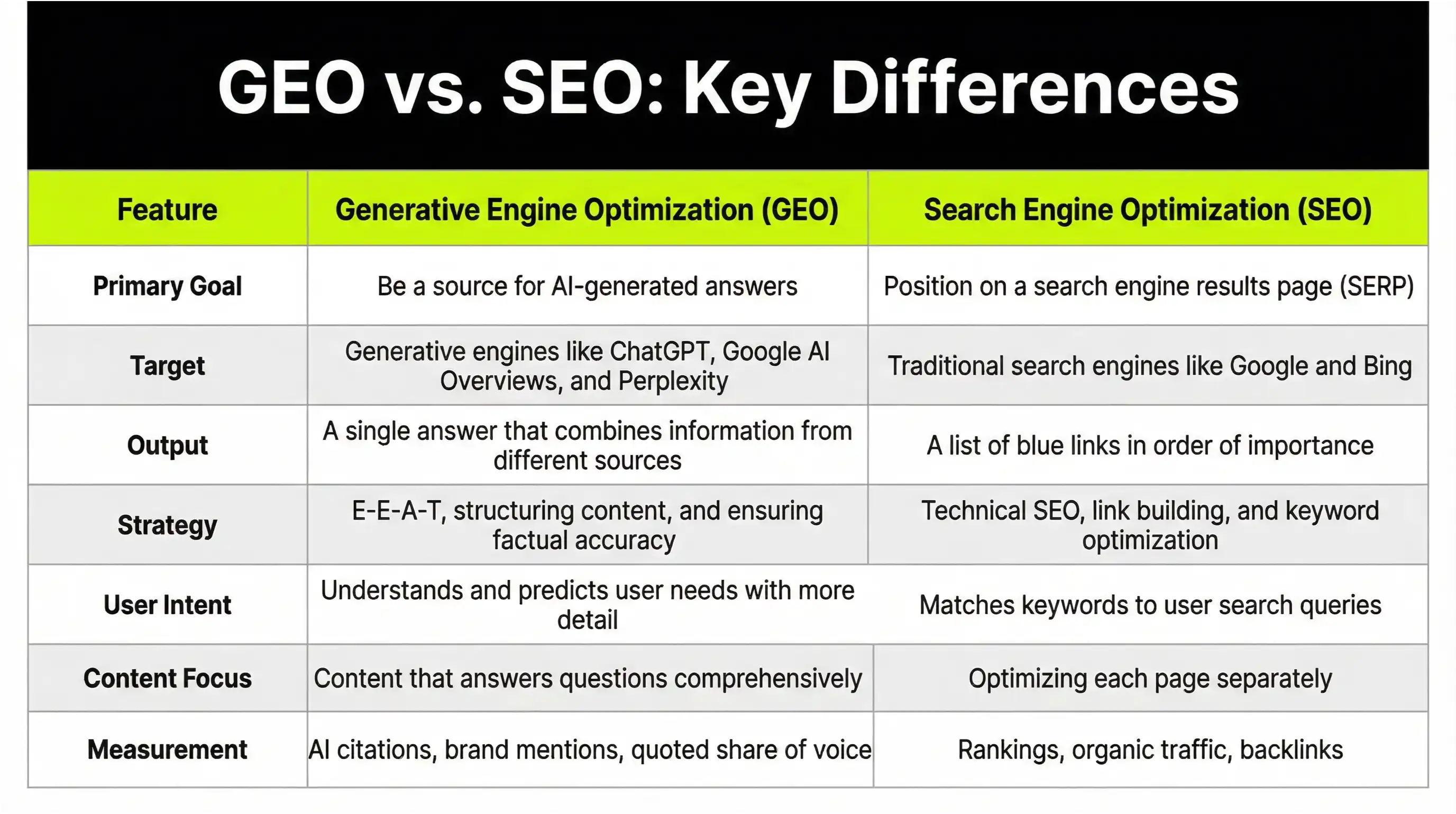
GEO is not a replacement for SEO!
Instead, GEO builds on a strong SEO foundation. For GEO to work well, you still need effective SEO in place. Think of SEO as the starting point and GEO as the next step to increase your content's search visibility.
GEO methods help lower-ranked websites more than those that already rank highly in traditional search. When these websites used GEO strategies like adding quotes, they sometimes saw their visibility improve by nearly 100%.
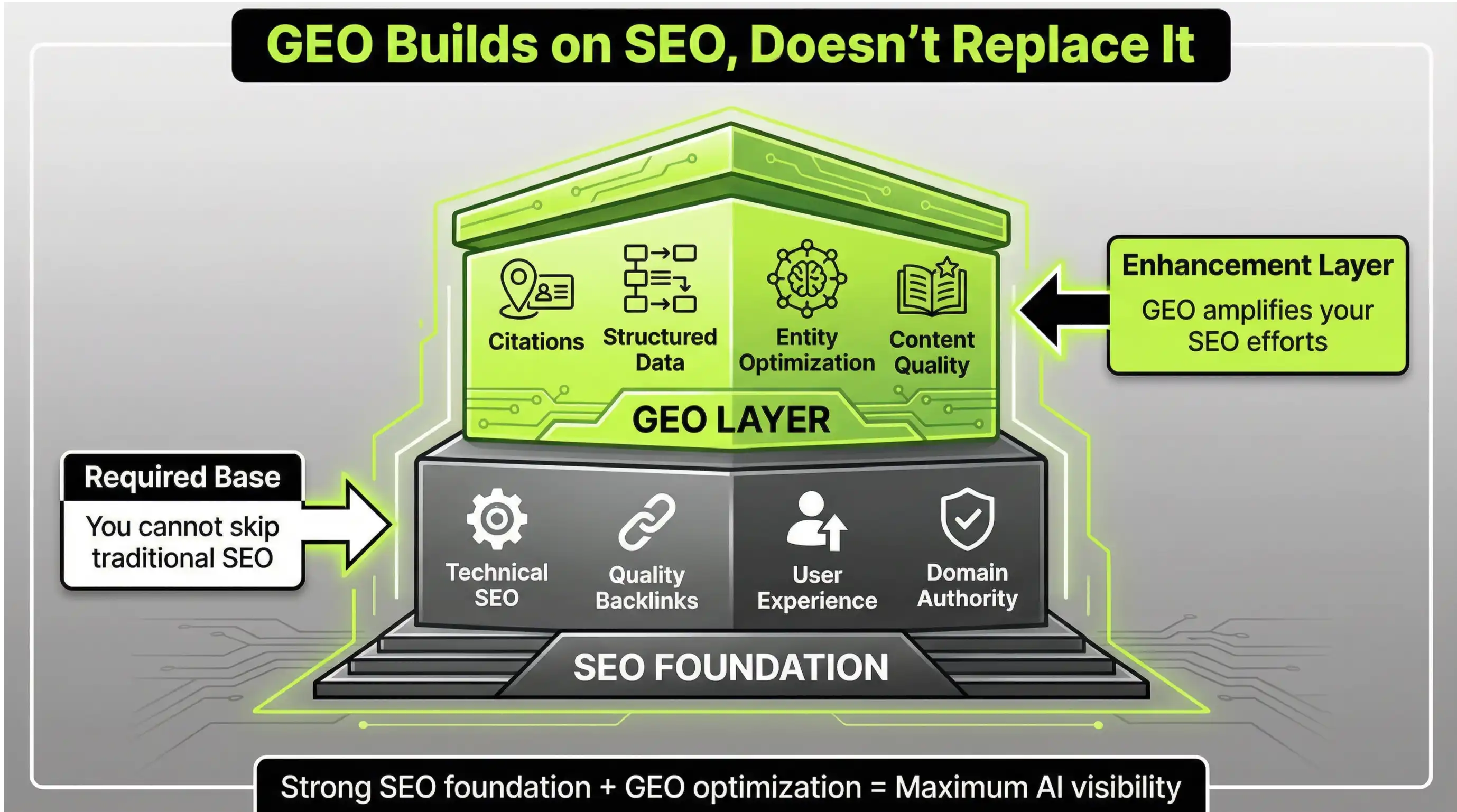
This is a big change from traditional SEO, where well-established websites with high domain authority usually have a big edge.
But this doesn't mean you can ignore traditional SEO. You still need a strong base of technical SEO, quality backlinks, and a good user experience. GEO is an extra layer of optimization that can make your current efforts even better, not a replacement for them.
Generative engines are already changing how people search and how digital marketing works. Brands that want to stay competitive can't ignore GEO. Here’s why GEO matters:

AI-powered alternatives are replacing traditional search. And, that's because AI chatbots and other virtual agents are changing how search marketing works. Marketers are already seeing the impact, and studies on Google's AI Overviews corroborate that click-through rates (CTR) have dropped sharply since mid-2024.
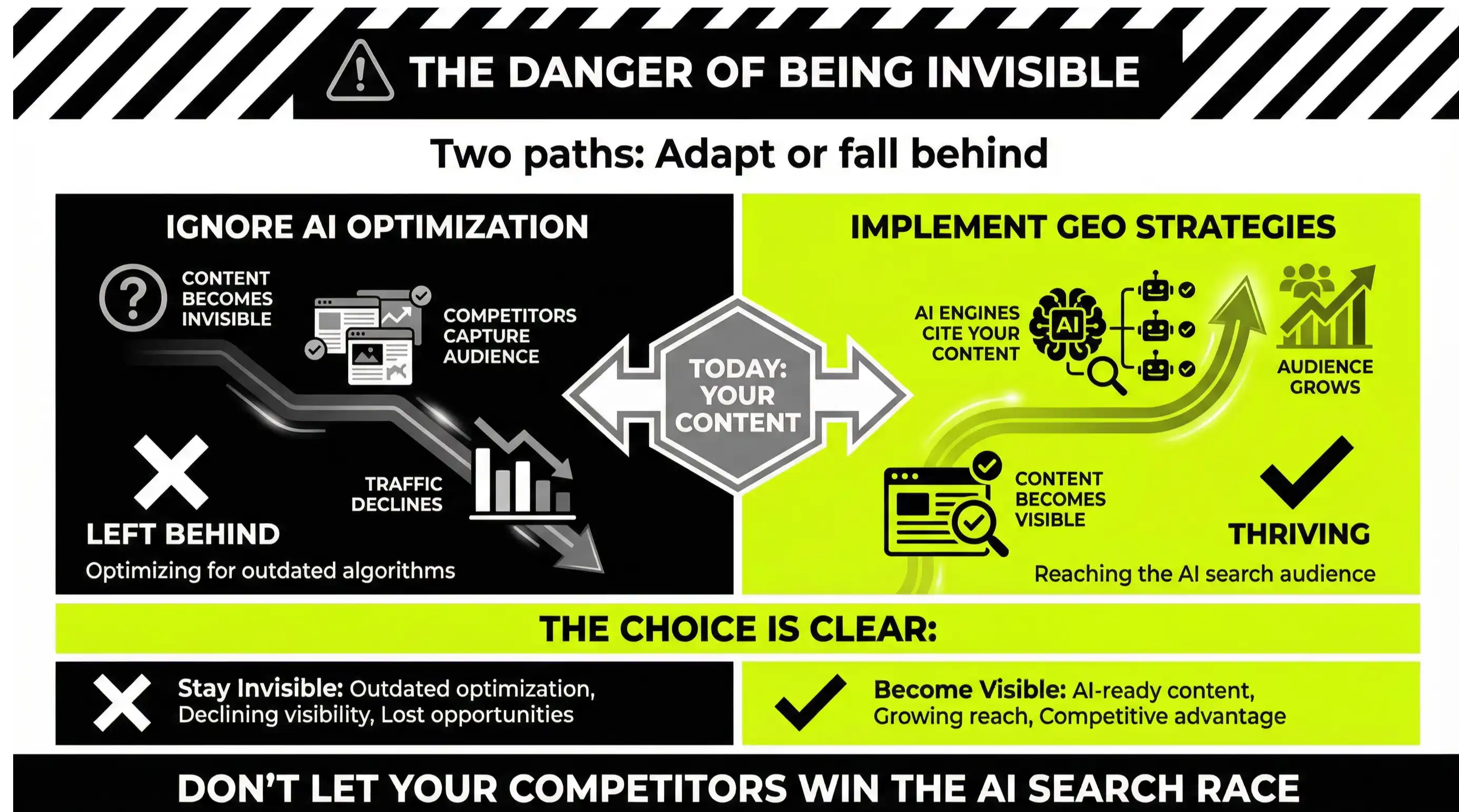
If you don't adjust to this new reality, your brand could become tough to find.
When your content isn't set up for this new format, it gets left behind as more people turn to generative engines for answers. While your competitors reach this growing audience, you'll be left working to improve your site for an outdated algorithm.
If you're evaluating external help to close that gap, our guide to the best GEO agencies for SaaS businesses covers the top eight options and a framework for choosing between them.
Now that you know what GEO is and why it matters, let's look at how it works.
Generative engines want to give users information that's accurate and reliable. One of the best ways to show AI engines that your content is trustworthy is to use credible sources.
How to implement this:

Adding quantitative data to your content makes it more credible and impactful. Using numbers and data-backed statistics, rather than general statements, can make content much more visible.
What you can do:
Another great GEO strategy is to use direct quotes from experts and reliable sources. The study found that adding quotes from reliable sources can make lower-ranked websites up to 99.7% more visible.
Steps for implementing this:

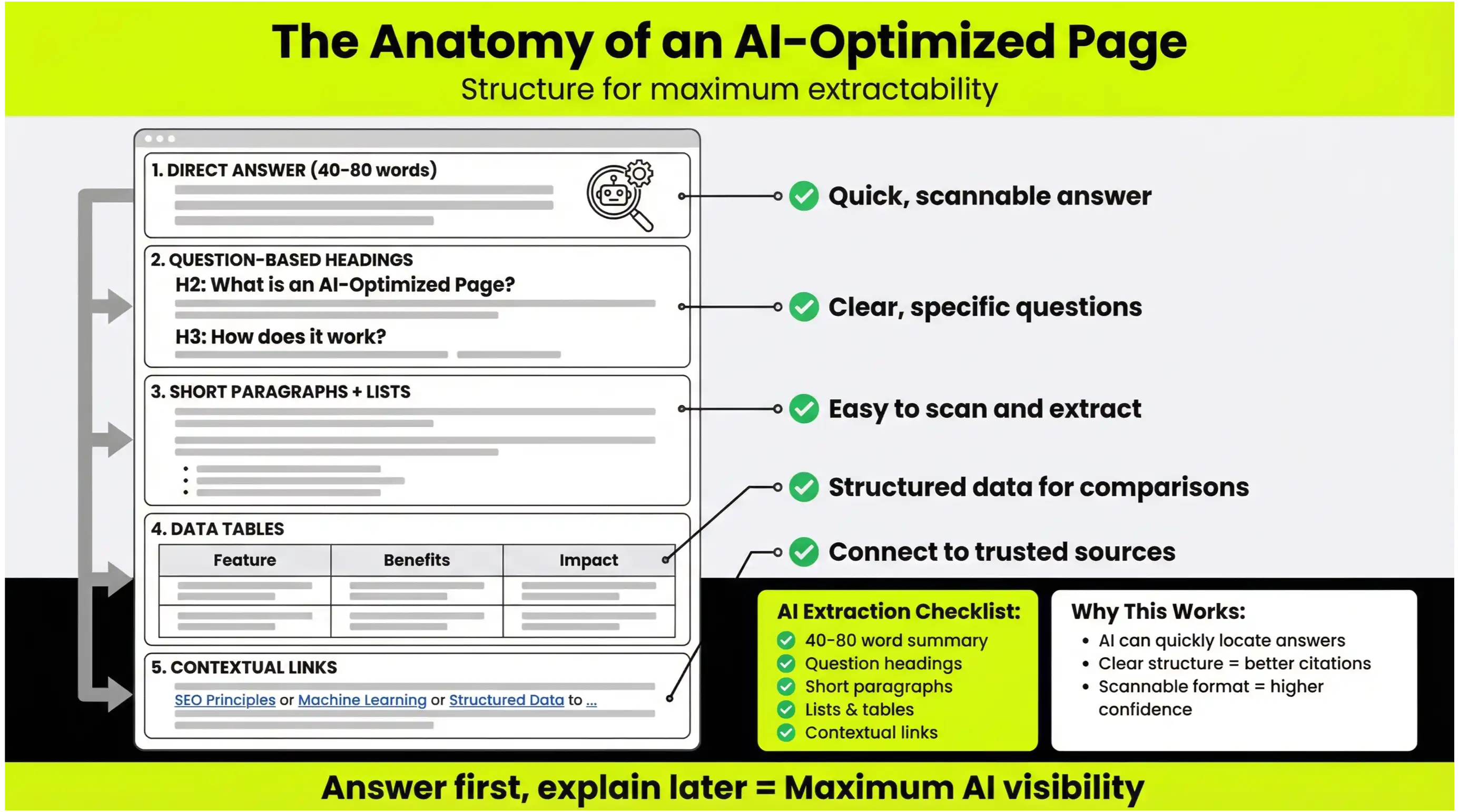
Start by focusing on the main question your audience is asking. Open each page with a short summary that gives a quick answer in 40 to 80 words.
After that, use the rest of the page to explain your answer and show your reasoning. Make sure every heading is a question. This helps readers and also makes it easier for AI to understand your content.
Identify the main topic of your page, and use links to connect it to other related topics. Link to trusted, original sources to give your content more context.
For formatting, use clear headings, short paragraphs, and lists to make your content easy to scan. If you are comparing products or stats, use tables so both people and AI can quickly find the information.
AI engines look at more than just your website when they assess your brand’s authority online. To make sure your GEO strategy covers everything beyond your own site, such as digital PR. You can start by researching which other sites mention your brand and in what contexts it appears organically.
A recent BrightEdge study found that 34 percent of AI citations come from online newspapers or media sites.
So it’s important to build and maintain good relationships with those outlets. The same study shows that almost ten percent of citations come from social media platforms like LinkedIn and forums like Reddit.
Find out where your audience spends time and get involved in those communities.
Also, make sure you have strong third-party proof of your products or services on review sites such as G2, Capterra, and Trustpilot, as well as in industry directories. As this kind of third-party evidence helps show how credible your brand is.
Google's Experience, Expertise, Authoritativeness, and Trustworthiness (EEAT) guidelines have been a core part of SEO for years, and they're even more important for GEO.
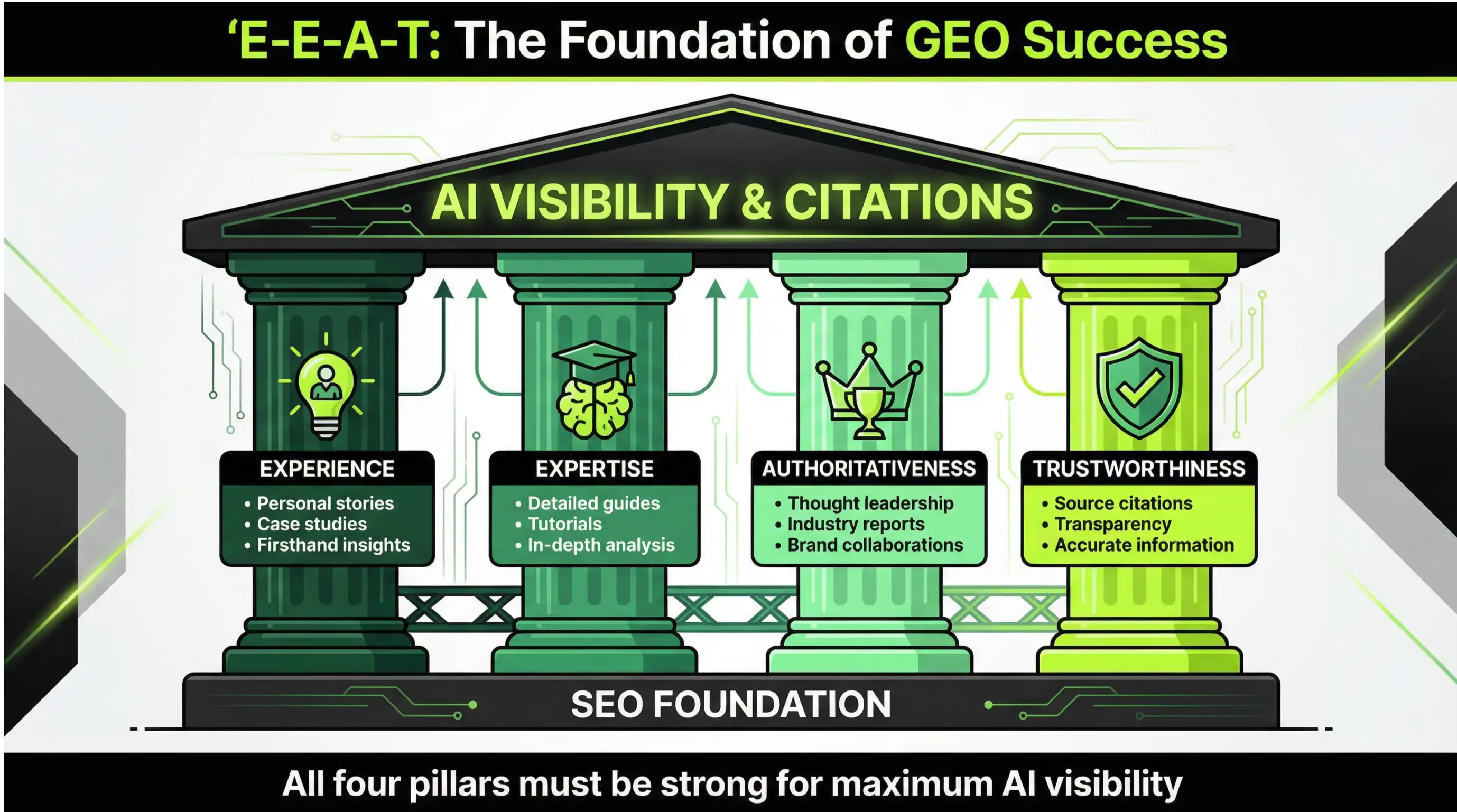
Generative engines prioritize content that demonstrates a high level of E-E-A-T. By following these guidelines, you can create content that's both helpful to users and easy for generative search engines to discover.
Here's how you can weave E-E-A-T in your GEO strategy:
Schema markup, also known as structured data, is a way to label and organize information on your web pages so that search crawlers and AI systems can understand it. Structured data helps optimize your content for LLMs and AI search engines.

<sameAs> property to connect your entities to reliable sources, such as Wikipedia and Wikidata. Implement the <citation> property to show where your information comes from.These factors improve user experience and play a key role in search and answer engine optimization, including local search. By using these actionable GEO strategies, you can increase your content's visibility in generative engine responses and help your brand stand out in search.
The Princeton/Google DeepMind study found that GEO methods don't work as well in all areas.
This means that a plan that works well for a health website might not work as well for a tech blog or an online store. To get the most out of your GEO results, you need to know these domain-specific details.
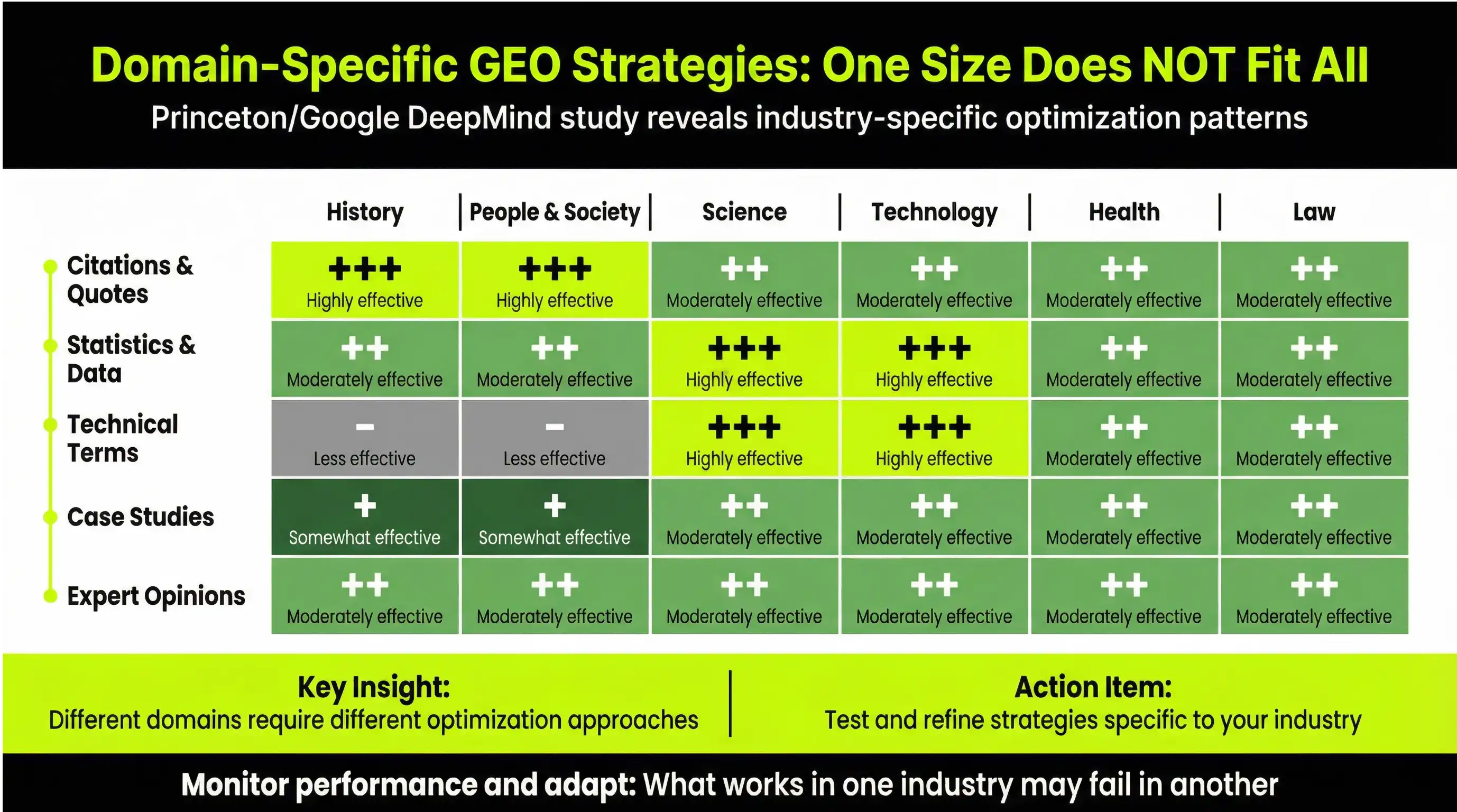
For instance, citation and quotation-based strategies worked best for content in the History and People & Society domains. On the other hand, Science and Technology content got more out of adding statistics and technical terms.
This finding shows how important it is to test and improve your GEO strategy. Figure out which strategies work best for your industry and audience by keeping an eye on your performance and changing your approach as needed.
To measure the ROI of GEO, you can look at how often your brand shows up in AI-generated answers to your target queries. Referral traffic from sites like ChatGPT and Perplexity is a direct sign of GEO success, even if it is still a small share of your total traffic.
So, identify how much traffic you get from platforms like ChatGPT and Perplexity, and how much your brand is included in AI responses for the topics you care about. Also, check which sources generative engines are citing and if your content is not being included, adjust your writing, structure, and authority signals until they are cited.

The rise of GEO marks a turning point in digital marketing. As AI-powered search engines gain traction, brands that adapt their strategies to this new landscape will succeed. Those who rely on traditional SEO techniques may see their visibility decline.
The key takeaways are clear:
By applying the strategies and principles outlined in this guide, you can position your brand for success in the era of AI-powered search. Now is the time to start optimizing for AI search engines so your brand stays visible in the future. Sign up for a free strategy call with EthicalSEO to learn how a GEO strategy rooted in credibility, trust, and authority can help you influence.
Q: What is the difference between GEO and SEO?
A: SEO (Search Engine Optimization) is about getting high search rankings in search engine results pages (SERPs), which are lists of links. GEO is all about being included as a source in AI-generated answers, which give a user a single, combined answer to user queries.
Q: Is SEO dead?
A: No, SEO is still alive. In fact, GEO can't be successful without a strong SEO base. SEO is like the foundational step of GEO. Generative engines will still see you as a credible source if you have a technically sound website, high-quality content, and a strong backlink profile.
Q: What are the most important GEO strategies?
A: The original research that came up with the term says that the best GEO strategies are to cite your sources, add statistics to your content, and use quotes from experts. These strategies tell the AI that your content is reliable and trustworthy.
Q: How can I tell if my GEO efforts are working?
A: Measuring GEO success is still a new field, but some important things to keep an eye on are brand mentions in AI-generated responses, referral traffic from AI platforms, and your share of voice in AI-powered search results. There are also more and more AI SEO tools that can help you keep an eye on how well you're doing.
Q: Is GEO only for Google?
A: No, GEO works with all generative engines, such as ChatGPT, Perplexity, and others. Google's AI Overviews are the most well-known example of generative search, but the ideas behind GEO can be used on any platform that uses AI to find answers.


