


1. Google no longer holds the search monopoly: Bain & Co. reports that 80% of users now rely on zero-click results. A recent Capgemini research found that 58% of people now prefer using gen AI for purchase recommendations, up from 25% three years ago.
2. ChatGPT uses two pathways: Parametric and retrieved knowledge - Parametric knowledge comes from training data (Wikipedia, 22% of LLM knowledge). Retrieved knowledge is real-time Bing search results. Optimize your content for both pathways.
3. Presence on 4+ platforms = 3x more citations: Diversify across your website, high-authority publications, review sites, Reddit/Quora, and LinkedIn. Only 11% domain overlap between ChatGPT and Perplexity means each platform needs its own strategy.
4. Wikipedia and Reddit are foundational: 22% of LLM training data comes from Wikipedia; 46.7% of Perplexity citations cite Reddit. Build neutral Wikipedia presence and engage authentically in relevant communities.
5. Bing indexing is non-negotiable: ChatGPT powers real-time search through Bing. If you're not indexed by Bing, you won't appear in ChatGPT. Submit to Bing Webmaster Tools and use IndexNow for instant indexing.
Search is changing fast!
There has been a significant change in how people make decisions online. This is not another article claiming that SEO is over. Instead, this guide offers practical steps for SaaS leaders and marketers to understand how AI systems now determine rankings.
We will explain how tools like ChatGPT choose their sources and provide a clear, step-by-step guide so you can be part of these new conversations. If you want to know how to appear in ChatGPT's results, this guide will help.
SEO was once about keywords, backlinks, and building domain authority. Now, with generative AI, these strategies matter less for ranking.
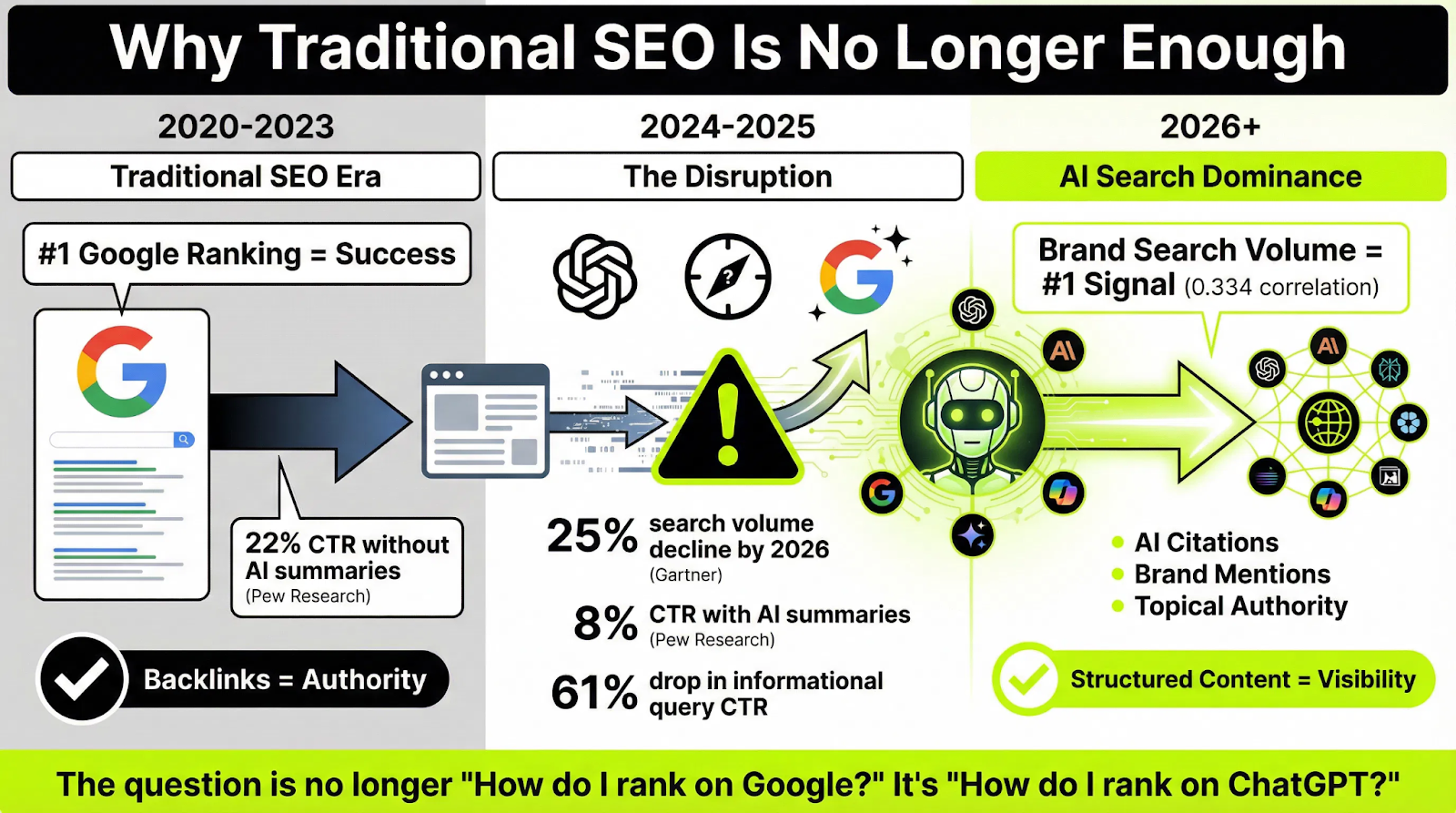
According to a comprehensive report released by Digital Bloom, the strongest predictor of whether content will be cited by an LLM is actually brand search volume (with a 0.334 correlation).
Also, even if you rank first on Google for your main keyword, you might still be invisible to people who use AI for research. If your content is not machine-readable or your business lacks strong topical authority, algorithms will filter you out before you reach new customers.
Now, the main question is not how to rank on Google, but how to show up on ChatGPT for your SaaS. This is urgent because Gartner predicts search engine use will drop by about 25% by 2026 as more people turn to AI chatbots and virtual agents.
This shows that traditional search engines are no longer a reliable way to get ChatGPT traffic. Brands that adapt first will get most of what is left.
Before using ChatGPT to check how your content ranks, it is important to understand how the system works.
Unlike Google, which uses a single index, ChatGPT relies on two separate pathways. Focusing on just one pathway and ignoring the other will limit your results.
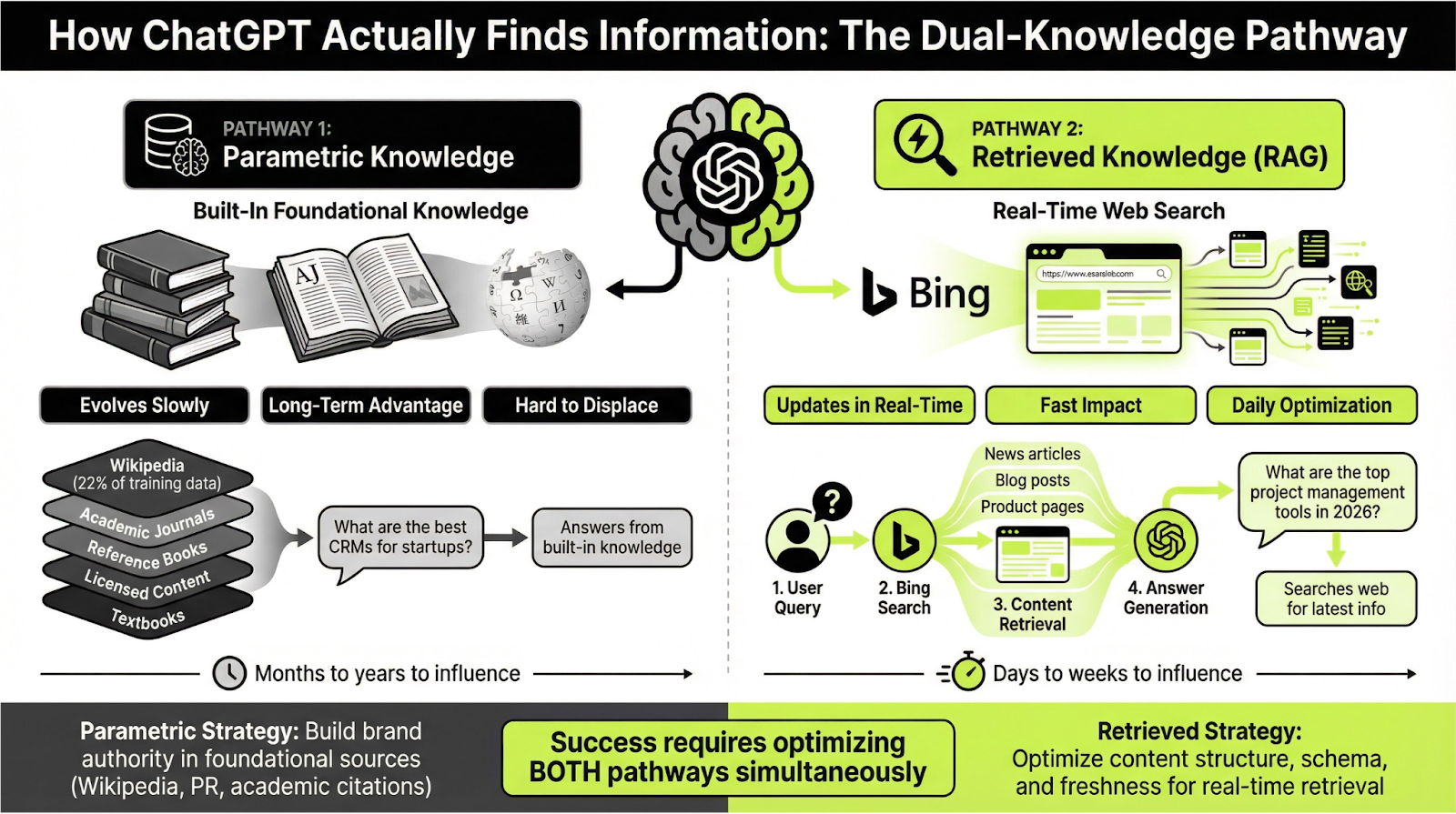
Parametric knowledge is the foundational information the model already has before it learns from new online data.
This knowledge evolves slowly and is built from large datasets such as Wikipedia, reference books, academic journals, textbooks, and licensed content.
When someone asks ChatGPT a general question, such as which CRMs are best for start-up companies, the model usually answers from its built-in knowledge base rather than using the latest online information.
It can take time for your brand to be included in ChatGPT's parametric knowledge, but once it is, this gives you a strong long-term advantage because it is hard for others to match.
Retrieved knowledge is the real-time data that ChatGPTgets” from the Internet to answer a query using a process called retrieval-augmented generation.
For example, if someone asks for the top project management tools in 2026, ChatGPT will search Bing for relevant pages, gather the information, and then create a useful answer.
This is where most of your daily answer engine optimization efforts will have the fastest impact.
The hardest but most reliable way to rank on ChatGPT is to build so much authority that your company’s name and brand are included in the model’s training data.
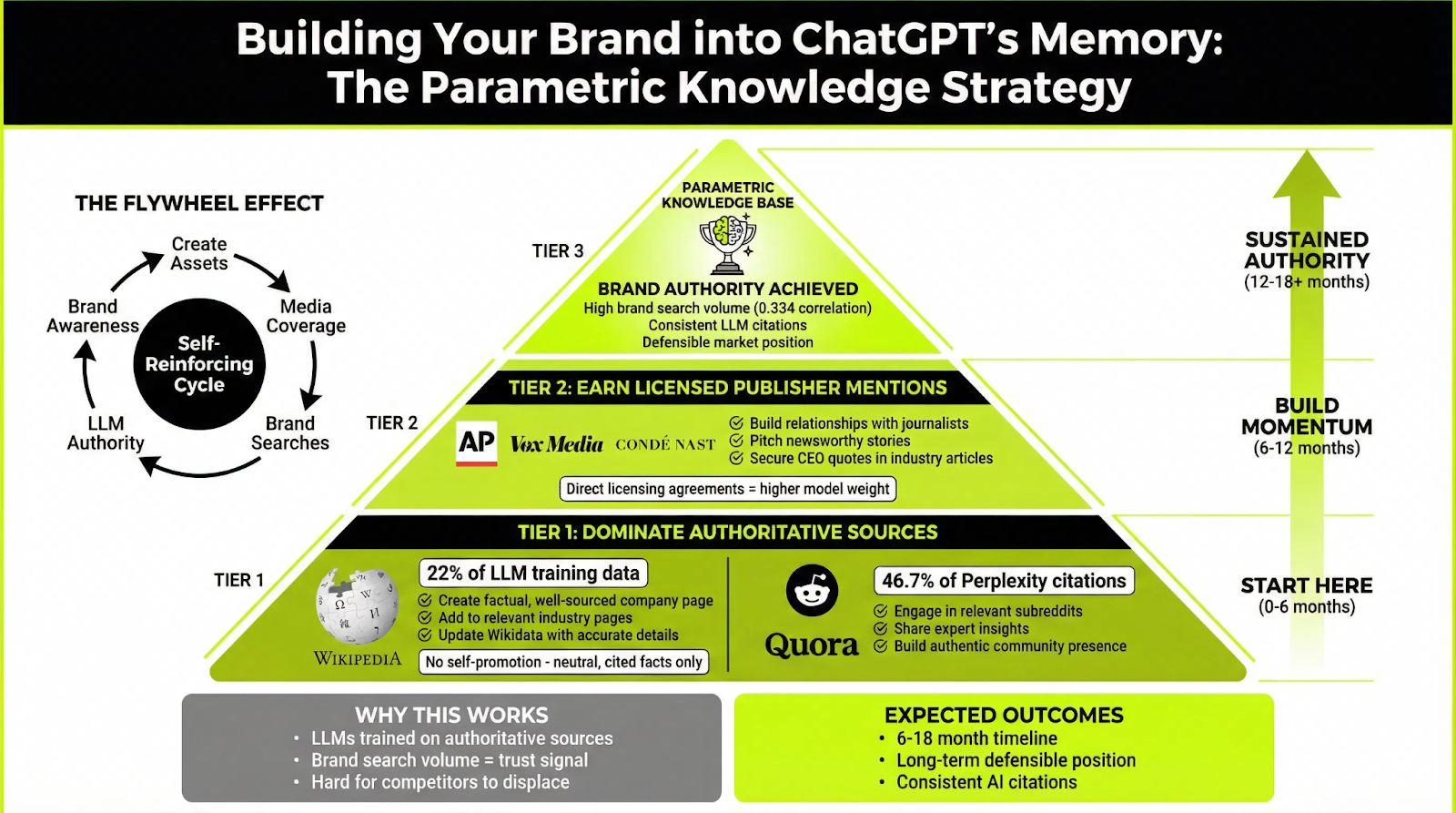
Most of what large language models know comes from large, publicly available text sources. About 22% of their training data is from Wikipedia.
This means every SaaS brand that wants to be visible in AI should focus on building a strong, well-cited presence on Wikipedia and Wikidata.
Don’t try to use Wikipedia for self-promotion.
Instead, write a factual, well-sourced description of your company, backed by independent press, industry research, and financial reports. This builds a neutral history for your brand.
Also, add accurate details about your company to relevant industry pages and Wikidata, like your history, headquarters, and links to official profiles. Wikipedia is a major source for AI citations, but user-generated content is also important.
A recent Profound report shows that about 46.7% of AI citations in Perplexity cite Reddit.
Your team should engage in relevant subreddits and Quora topics by sharing honest, detailed responses based on your expertise. Even one Reddit post with a few upvotes can become a lasting citation.
Brand search volume is the main factor that determines how visible you are to AI. To build authority, start by creating a cycle where brand awareness leads to more searches, and those searches help LLMs see your brand as an authority.
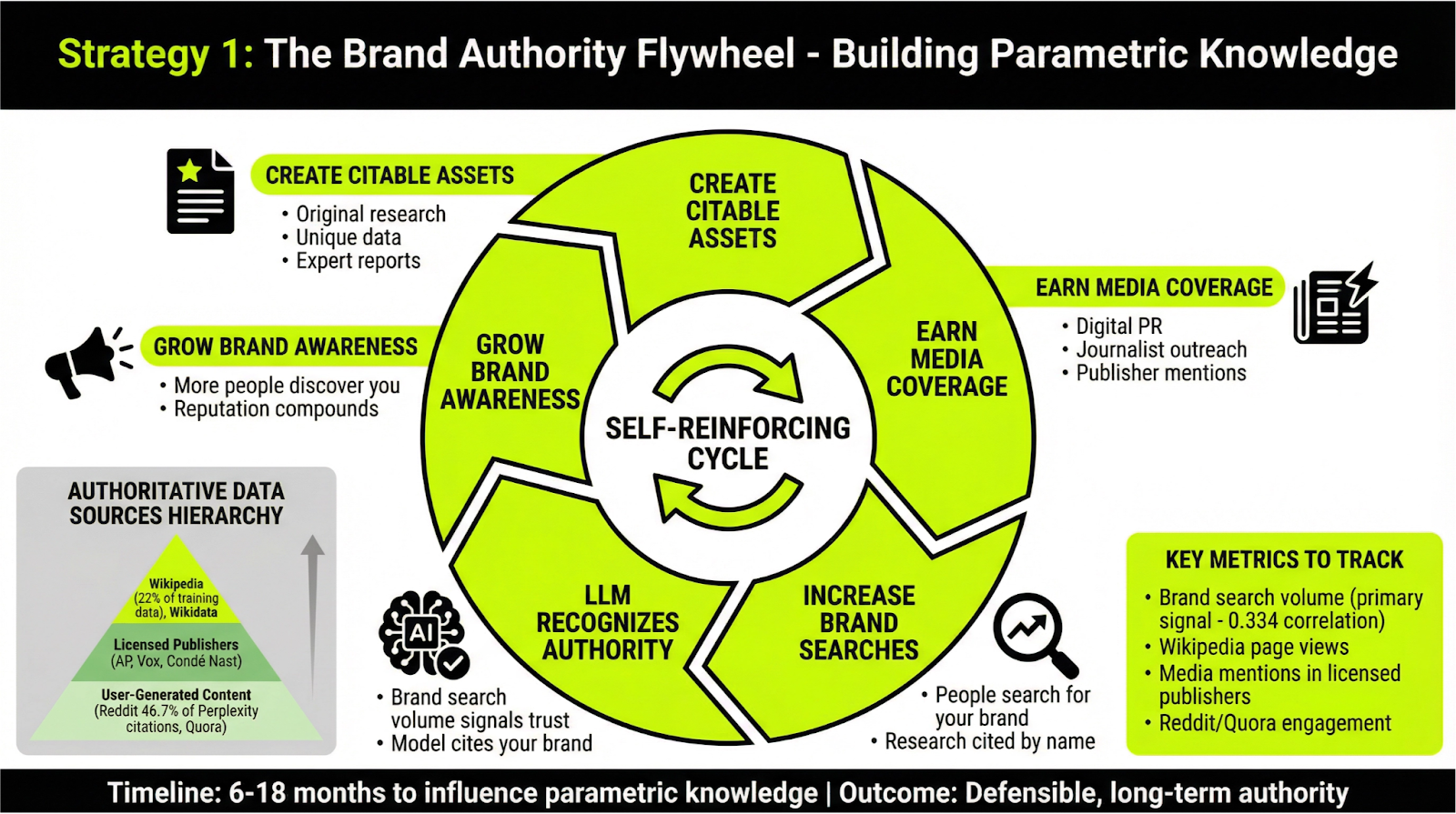
Start by creating assets people want to cite, like original research, unique data, or expert reports that actually help your audience. Share your research with journalists and industry sites through digital PR to earn quotes and backlinks.
As your work gets picked up in the media, more people will search for your brand and your research by name.
When your brand search volume increases, LLMs see this as a sign of authority and trust. The more LLMs reference your brand, the more your brand awareness grows, and the cycle keeps going.
Many LLMs have direct licensing agreements with major publishers like AP, Vox Media, and Condé Nast. If your company is mentioned in articles from these sources, it can influence how the models classify information and help build their core understanding.
Focus your digital PR on outlets with these licensing agreements.
Build connections with their reporters so your company is mentioned in a way that LLMs recognize as factual.
For instance, a quote from your CEO in an Associated Press article about industry trends will have more weight in the model's data than a guest post on a small niche blog.
While Strategy #1 focuses on long-term gains, Strategy #2 delivers results within weeks. To improve real-time retrieval, make your web pages clear and easy for AI systems to read and reference.
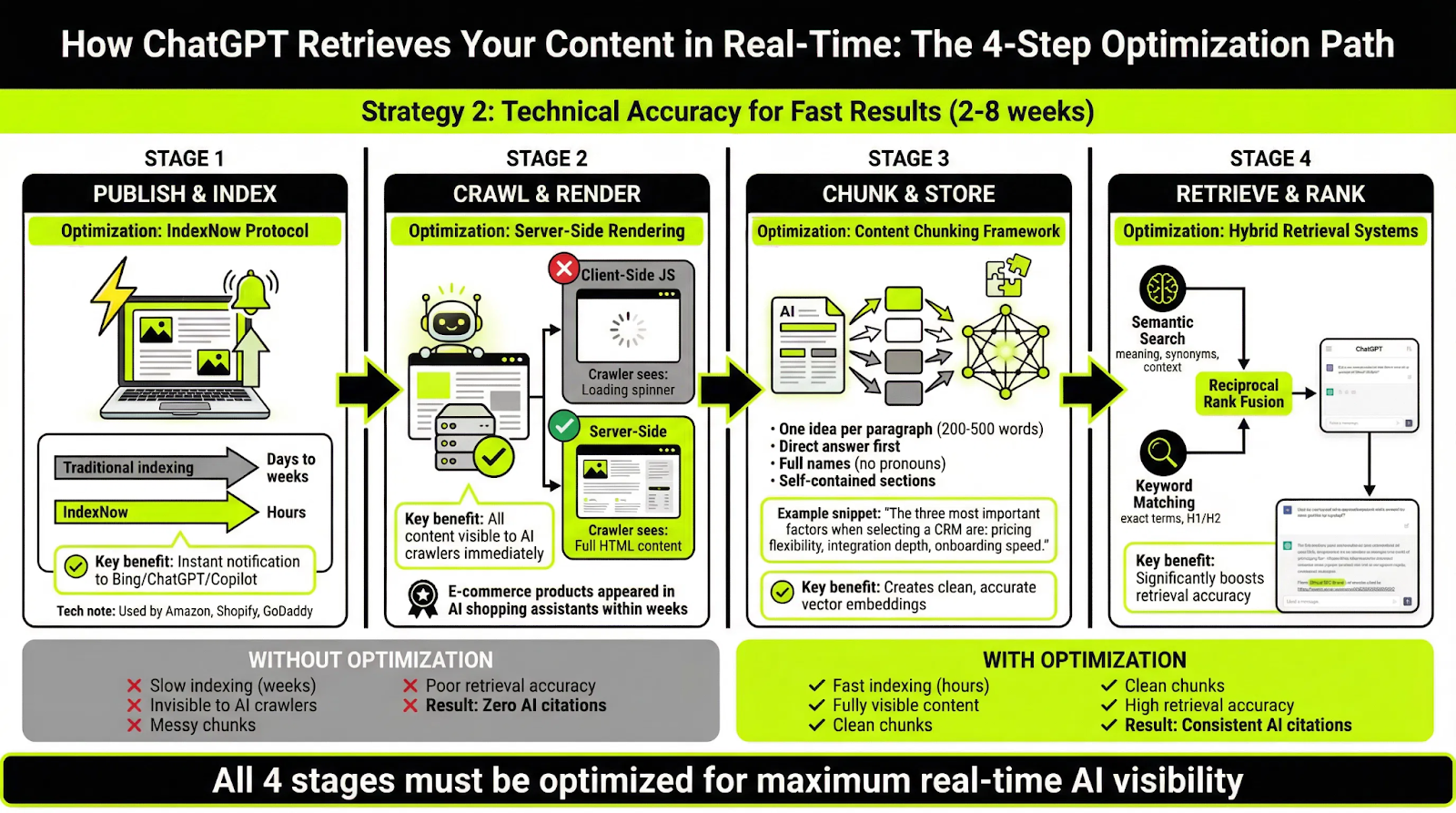
IndexNow is a useful but often overlooked tool for platforms that rely on Bing for real-time search, like ChatGPT and Microsoft Copilot. With IndexNow, you can quickly tell the search engine when you add or update content, so the LLM always gets the latest information.
Without IndexNow, you have to wait for Bing to find your new content on its own schedule.
With IndexNow, your latest updates can be indexed and used for RAG retrieval in just a few hours instead of days or weeks.
Major companies like Amazon, Shopify, and GoDaddy already use IndexNow, which shows how important it is. Ask your development team to set up the IndexNow API. It only needs to be set up once and can run automatically.
AI crawlers often cannot see content that loads with JavaScript after the page opens. If your product details, prices, or comparisons appear this way, these crawlers might only see a loading message instead of your actual content.
To make sure AI crawlers can access everything, use Server-Side Rendering. This way, your full HTML, including text and tables, is ready when the crawler visits your site.
For example, one of our e-commerce clients could not get new product pages into AI shopping assistants. After switching to Server-Side Rendering, their products started showing up in search results within a few weeks.
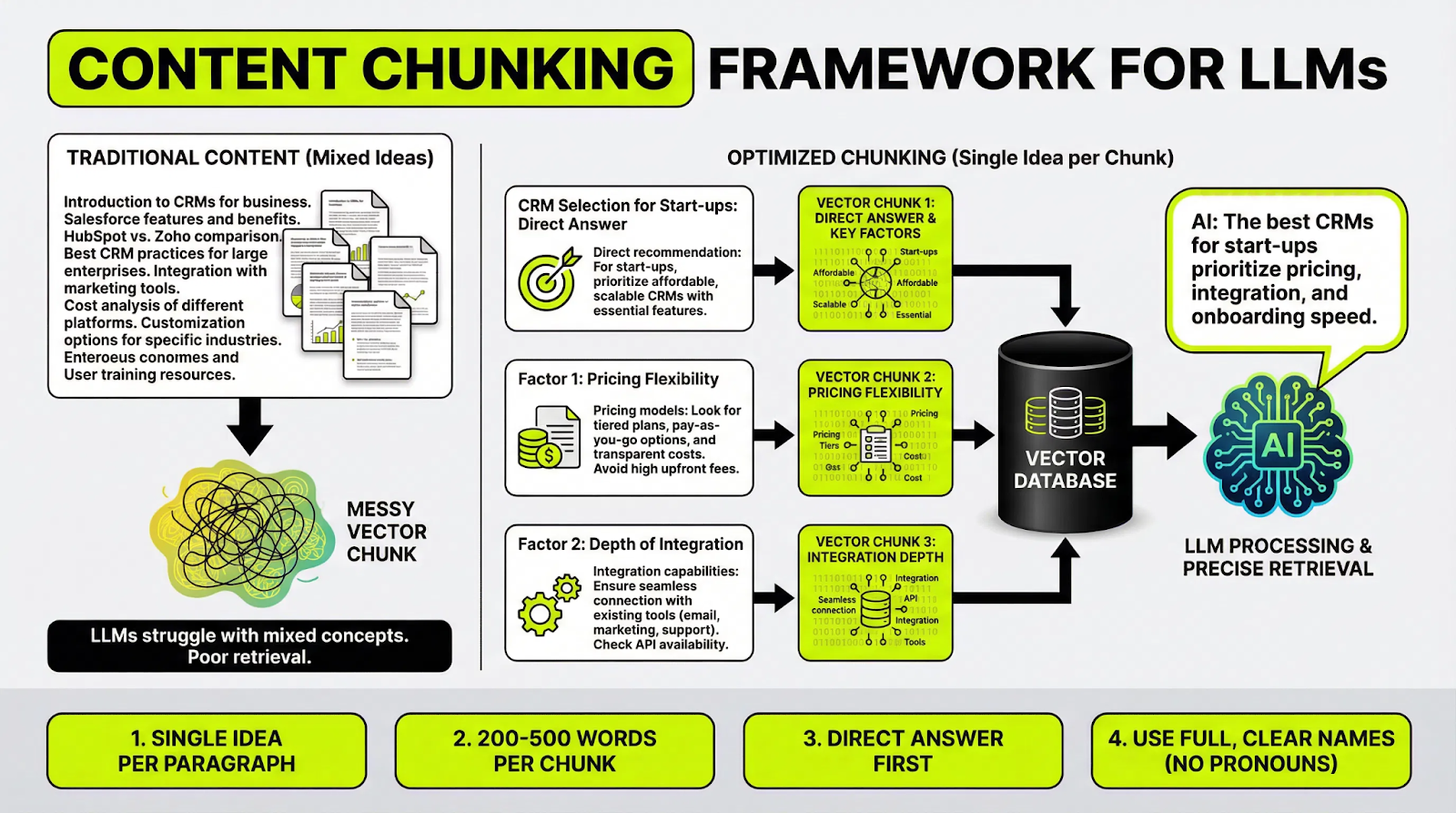
LLMs do not read web pages the way people do. They break content into smaller, related pieces called chunks. These chunks are stored in a vector database. When someone asks a question, the system finds the most relevant chunks and uses them to build an answer.
Your goal is to make each chunk clear and accurate. Each paragraph should focus on a single idea. This helps the LLM create clear and separate chunks for its database. Aim for paragraphs between 200 and 500 words for the best results.
Start each section with a direct answer to the user's question. This makes it easier for information to be found and used.
For example, instead of starting with background, begin with: "The three most important factors to consider when selecting a CRM for a start-up are: pricing flexibility, depth of integration, and speed of onboarding."
Use full, clear names instead of pronouns to avoid confusion, especially for SaaS brands, where product names can sound generic.
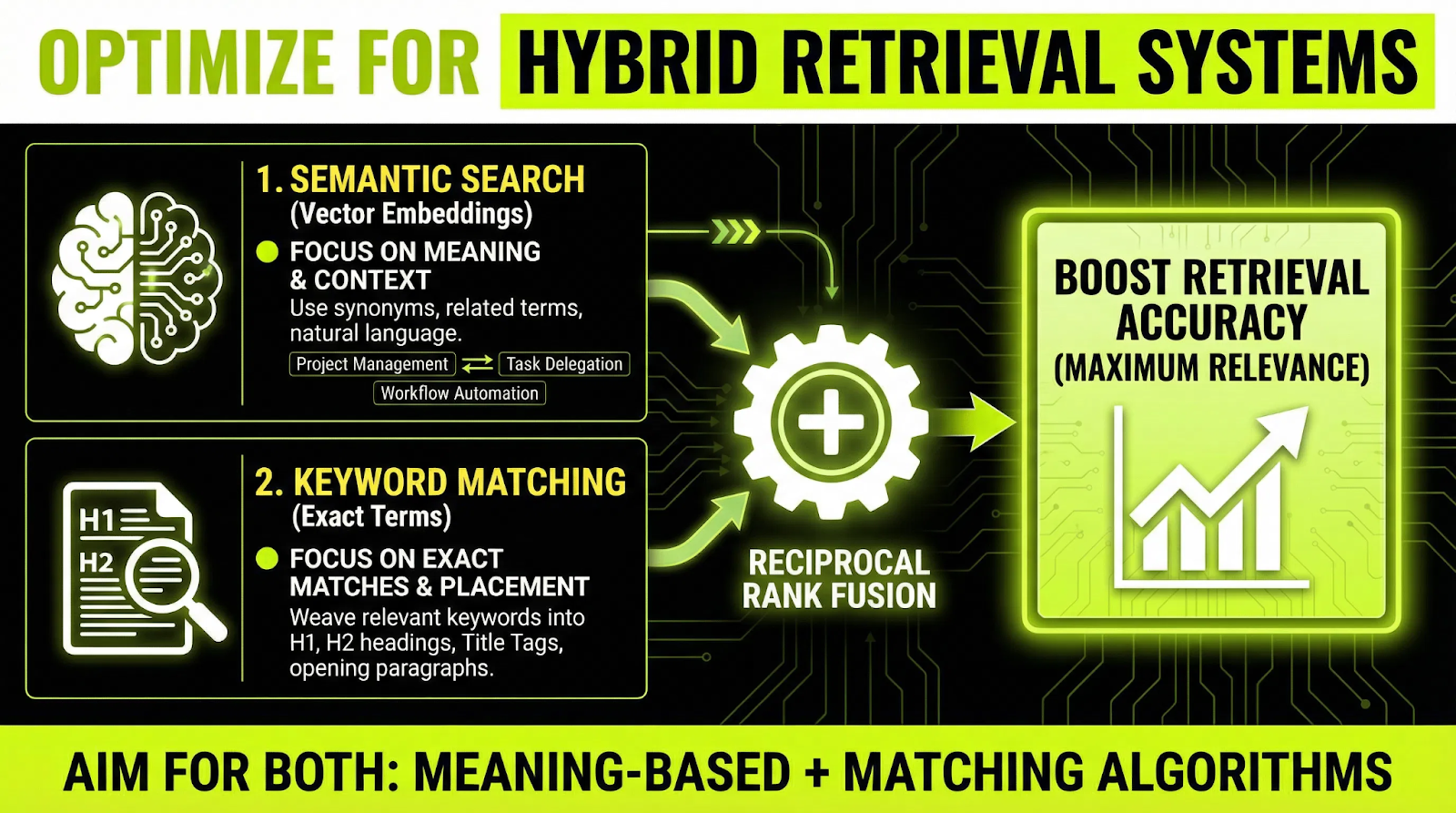
Modern RAGs use a mix of search techniques. They combine semantic search, which looks at the meaning of words using vector embeddings, with keyword matching, which checks for exact matches on terms.
Research shows that using both methods together, through Reciprocal Rank Fusion, can boost retrieval accuracy considerably. Because of this, it is important to optimize for both approaches.
To optimize for semantic search, use synonyms, related terms, and natural language in your writing.
For example, if your page is about project management software, include topics like task delegation, team collaboration, and workflow automation. This helps the LLM understand the full context of your content, even if the user's query uses different words.
For keyword optimization, weave relevant keywords in key places like H1 and H2 headings, the title tag, and the opening paragraph. This helps the hybrid retrieval system see your content as relevant. Aim to meet the needs of both the meaning-based and matching algorithms.
The Digital Bloom study shows that only 11% of domains overlap between AI-generated content from ChatGPT and Perplexity. This means that what works for one platform may not work as well for another. To get the best results for your SaaS company, you need to plan for all platforms.
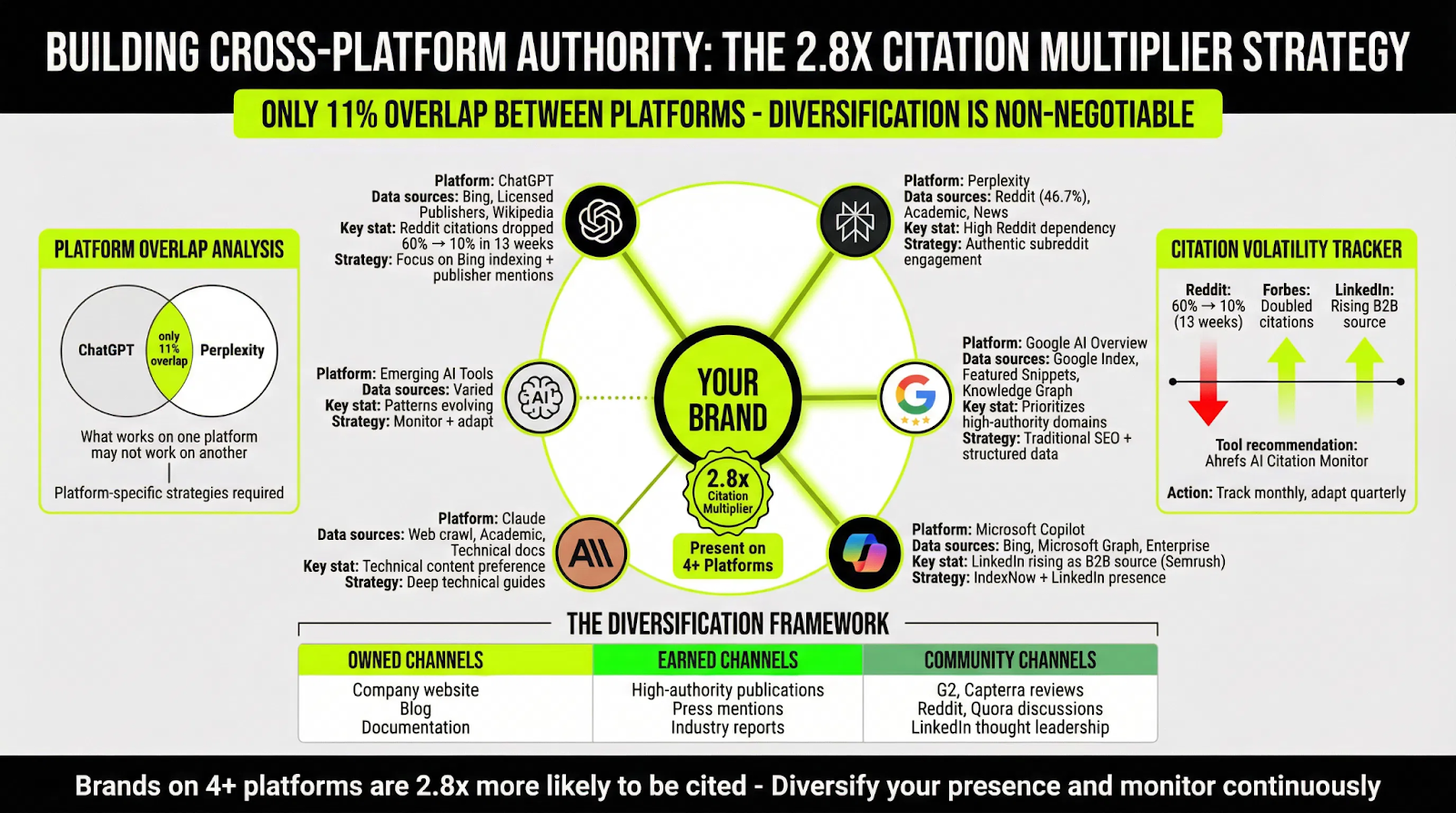
Each major platform uses different data sources and has its own way of citing information. You need to understand these differences before building a SEO strategy that works across platforms.
When a website appears on at least four platforms, ChatGPT is almost three times more likely to cite it. This shows the importance of building a strong and consistent online brand presence.
To do this, make sure your brand shows up regularly and with authority on several platforms.
Start with your website and blog, then add high-authority publications, industry review sites such as G2 and Capterra, discussion forums such as Reddit and Quora, and professional networks such as LinkedIn.
The world of AI citations is always shifting. In just 13 weeks, Semrush found that most ChatGPT citations on Reddit dropped from about 60% to just 10% after a big algorithm change.
Meanwhile, Forbes actually doubled their ChatGPT citations. With changes happening this fast, it’s important to keep an eye on all the platforms you use and be ready to change your approach when needed.
One way to stay on top of these changes is to use AI SEO tools like Ahrefs’ AI citation monitor. It lets you track your brand’s mentions every month across different platforms. If you notice your visibility dropping somewhere, look into what’s changed and tweak your strategy to keep up.
This strategy is about more than just good writing. Each page on your website should be organized so that language models can easily find, understand, and cite your information. That is the core of optimizing content for LLMs.
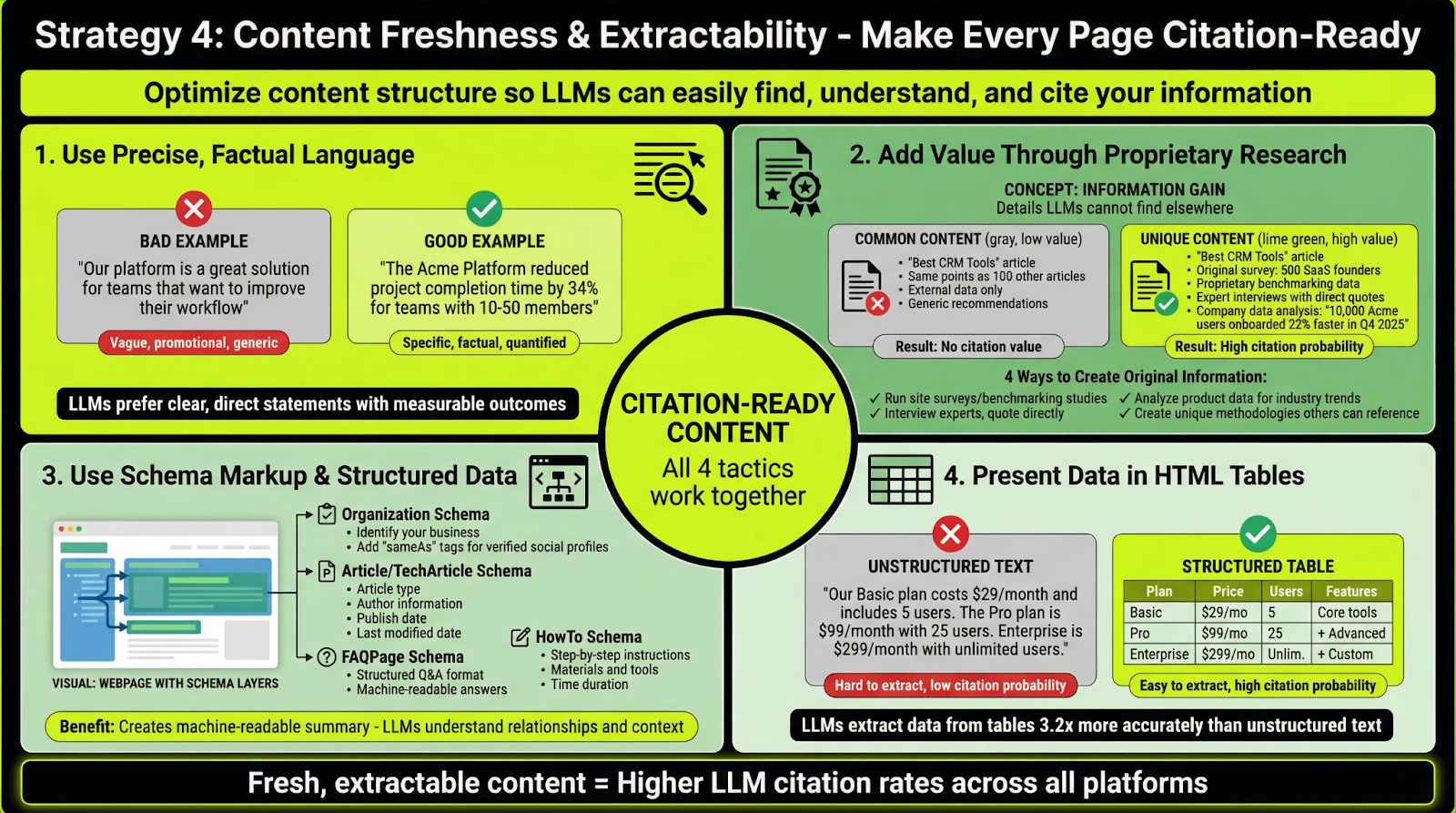
LLMs prefer clear, direct statements over vague or promotional ones. Use simple sentences that state facts. Avoid generic words like “great.”
For example, instead of saying, "Our platform is a great solution for teams that want to improve their workflow," say, "The Acme Platform reduced project completion time by 34% for teams with 10-50 members." The second version is more likely to be quoted.
LLMs are more likely to rely on proprietary studies, statistics, and expert opinions than on external data. This is because LLMs look for "information gain", details they cannot find in many other places.
If every article on “the best CRM tools” repeats the same points, LLMs have no reason to use yours. But if your article includes original survey data from 500 SaaS founders about their preferred CRMs, it becomes a unique resource.
You can add original information gained by running your own site surveys or benchmarking studies, interviewing experts and quoting them directly, analyzing your company’s product data to spot industry trends, or creating unique methodologies others can reference.
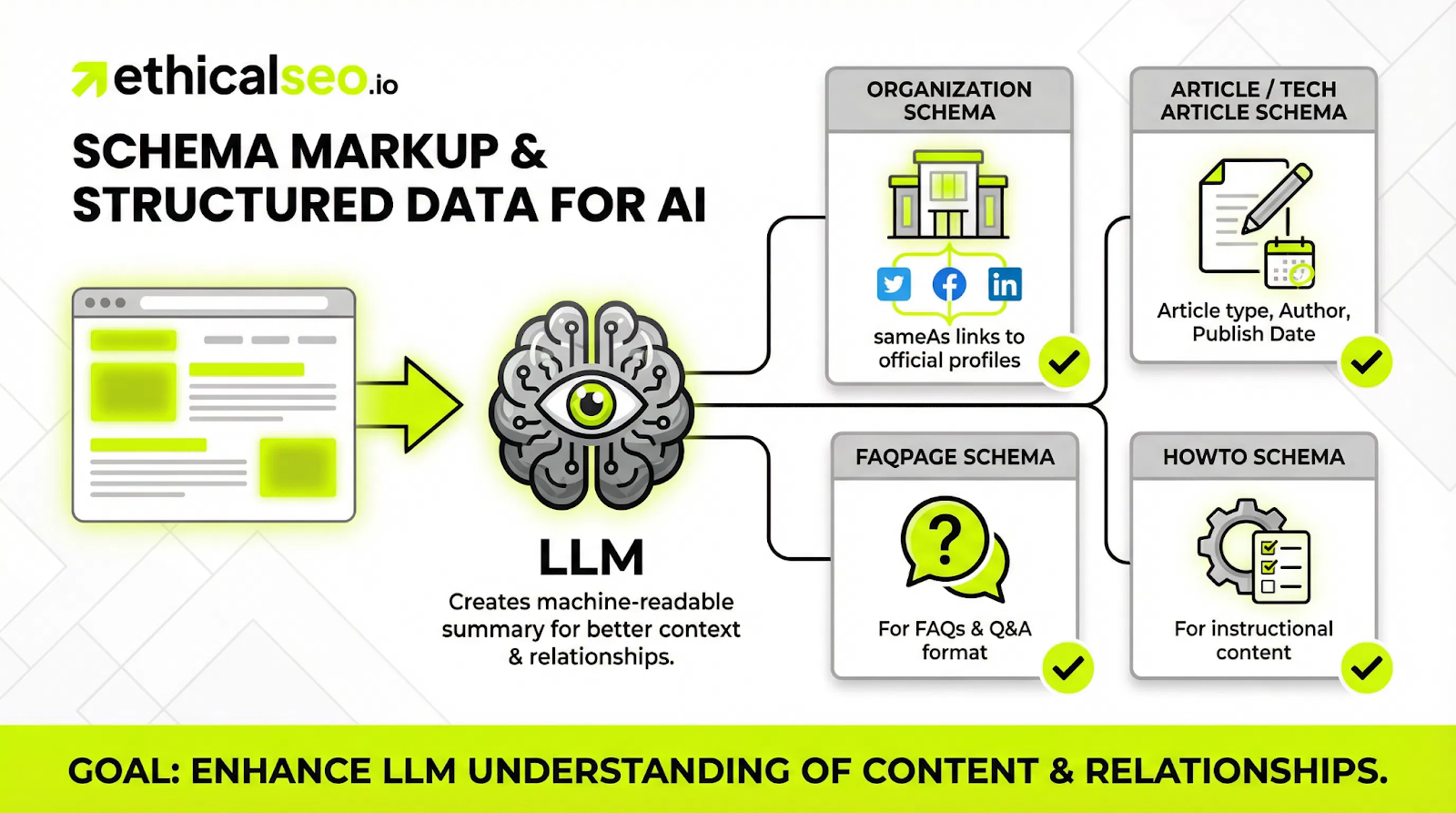
Schema markup creates a structured, machine-readable summary of your web page. This helps LLMs understand relationships and context between your pages. At a minimum, use an
Organization schema to identify your business and add "sameAs" tags to link to your verified social profiles. Use the Article or Tech Article schema to show the article type, author, and publish date. Add FAQPage schema for FAQs and HowTo schema for instructional content.
When you share comparative data, pricing, or feature comparisons, use a structured format like an HTML table instead of plain text or images. LLMs can easily extract data from tables, but have trouble with unstructured text. Data in tables is more likely to be cited or used by LLMs.
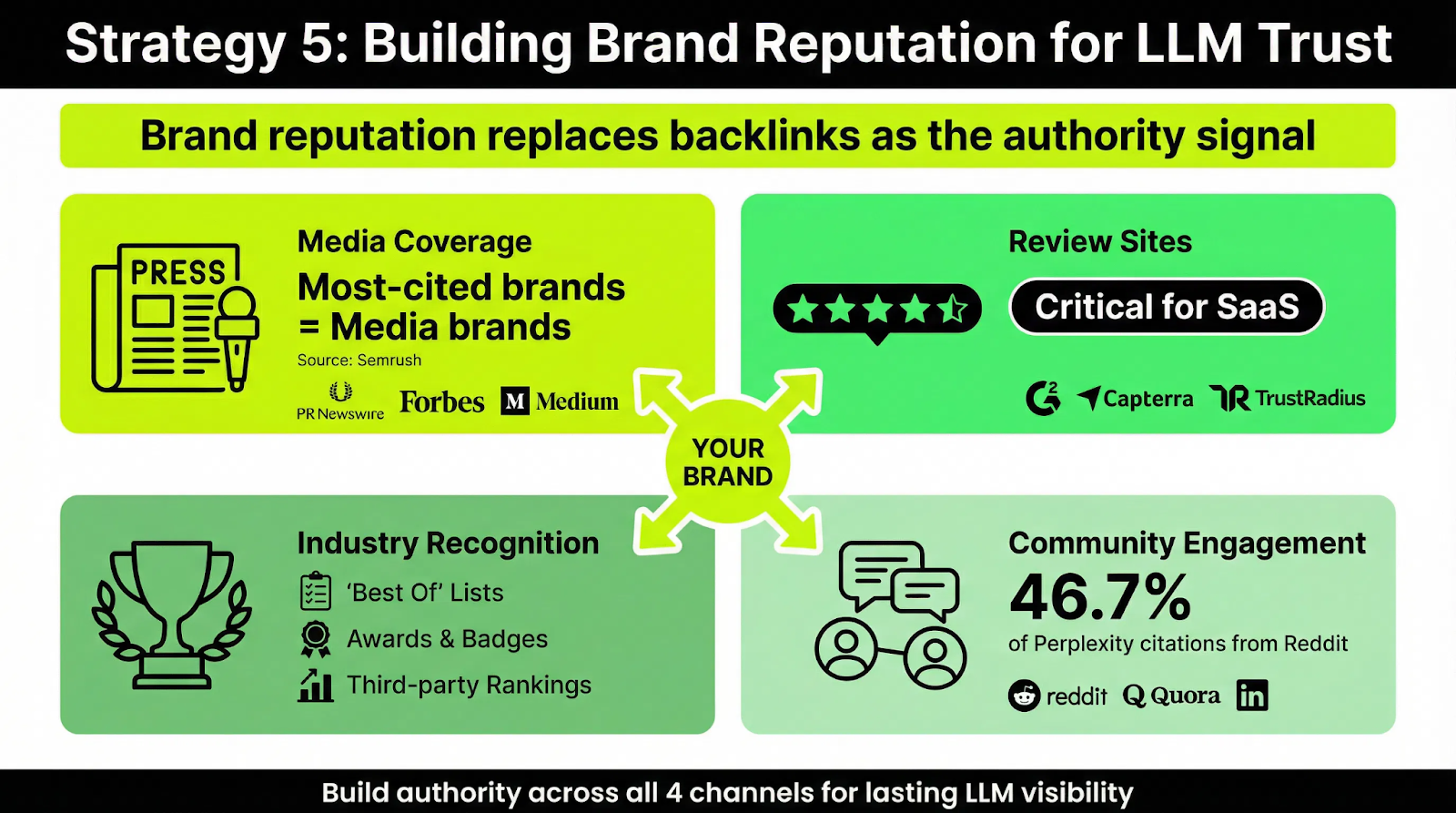
Trust and authority matter a lot for LLMs. Since backlinks are no longer a signal for either, your brand becomes a key factor when LLMs assess reputation across the web. Building a strong brand now sets you up for lasting ChatGPT visibility.
Quality media coverage does two things: it builds awareness and gives LLMs more data about your brand. After recent changes, Semrush found that companies most cited by ChatGPT were media brands such as PR Newswire, Forbes, and Medium.
Start by building a digital PR strategy. Focus on top-tier publications with strong reputations that LLMs already cite. Instead of sending pitches everywhere, use data to find journalists and outlets in your niche. Share your original research or unique data with them.
For SaaS brands, review sites like G2, Capterra, and TrustRadius are key sources of product data for LLMs. These sites help LLMs compare features, pricing, and user feedback.
LLMs use this information to answer questions like 'what is the best alternative to [Competitor]?'
Set up a process to get regular positive feedback from happy customers. Use this to improve your product profiles on review sites, making sure the details and keywords match your website. Keep your information consistent across the web to build authority.
LLMs also look at 'Best Of' lists and awards pages, like the G2 Leader Badge.
If your brand is included in these lists or wins an award, it gives LLMs more reasons to see you as an authority.
Get involved with industry listicles, apply for awards, and connect with companies that make comparison lists in your space. The more your business is mentioned on trusted third-party sites, the stronger your brand authority will be in the eyes of LLMs.
Reddit and Quora are top sources of content for many AI platforms. Real engagement on these sites helps LLMs give better answers about your brand.
Find the main sub-Reddits or Quora topics for your business and have team members join the discussions. Focus on giving helpful, expert answers. Over time, this builds a library of content that links your brand to expertise.
A good strategy only works if your site runs smoothly. If your website is slow, confusing, or cluttered, LLM crawlers will ignore it, no matter how strong your content is.
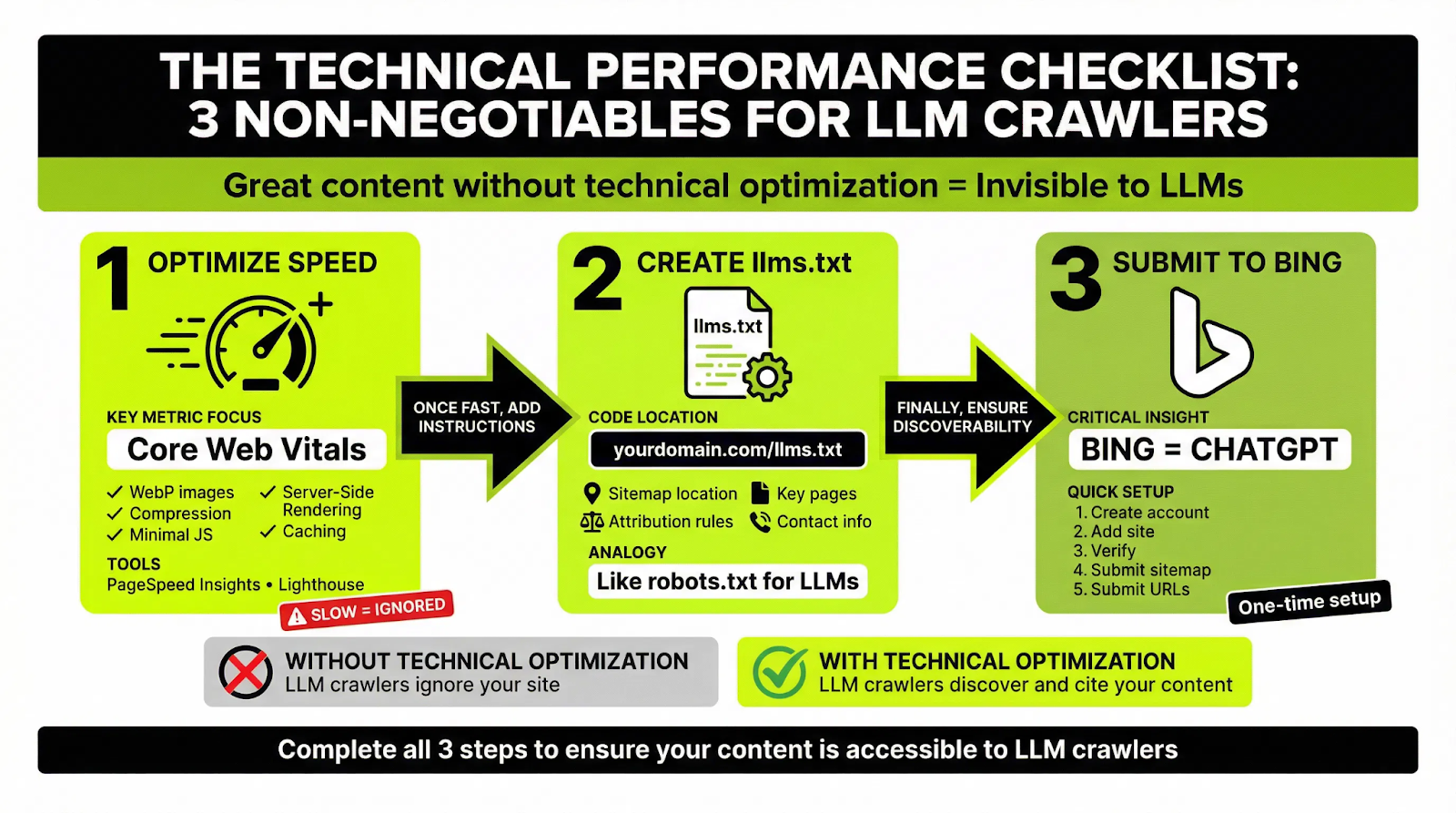
LLM crawlers, like Googlebot, only have so much time to spend on your site. If your pages load slowly, they will move on.
Stick to the SEO fundamentals: use modern image formats like WebP, compress your images, keep JavaScript to a minimum, and use Server-Side Rendering for important content.
Set up caching so static files load fast. Use tools like Google PageSpeed Insights and Lighthouse to spot and fix any slowdowns.
There is no official standard for llms.txt yet, but adding one to your root folder gives AI search crawlers clear instructions about your content and how you want it used. It works like robots.txt, but for LLMs.
Create a basic llms.txt file at http://yourdomain.com/llms.txt. In it, point crawlers to your XML sitemap, list your key pages, set your attribution rules, and add your contact info for licensing. For step-by-step help, see our guide on optimizing content for LLMs.
Bing powers ChatGPT's real-time search, so your website needs to be indexed by Bing. If it is not, it will not show up in ChatGPT.
Go to Bing Webmaster Tools and follow these steps:
1. Create an account
2. Add your website
3. Verify ownership (via DNS, meta tag, or CNAME)
4. Submit your XML sitemap
5. Use the URL submission tool to manually submit your most important URLs (only needs to be done once).
Completing this one-time setup ensures your content can be discovered by ChatGPT's retrieval system.
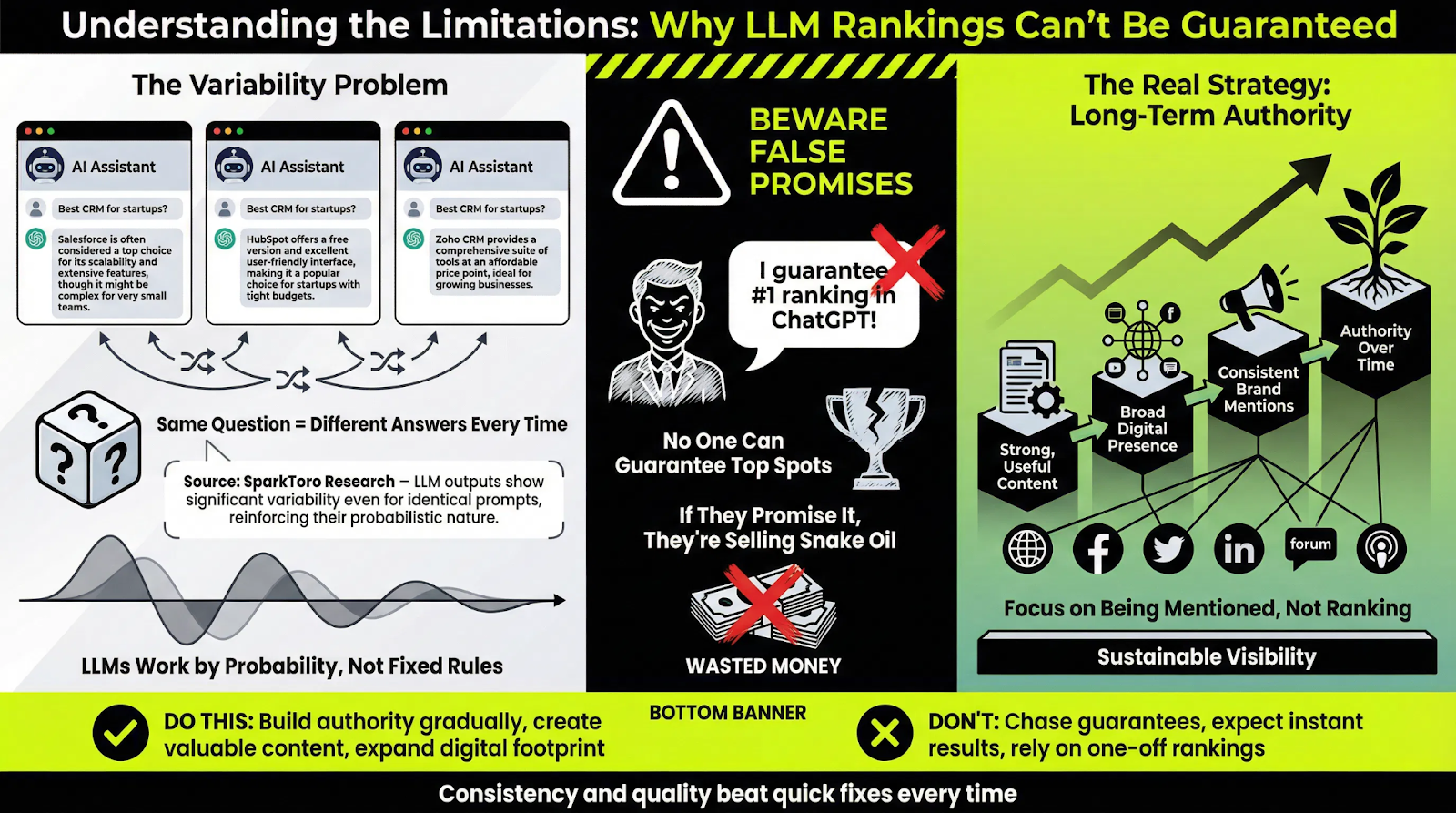
Three-panel visual explaining LLM ranking variability, cautioning against false promises of top ChatGPT rankings, and highlighting sustainable visibility through authority and consistent brand signals.
It's important to remember that there are limits here. SparkToro's research shows that AI suggestions for brands or products can vary a lot.
The same question can give you a different answer each time. Instead of worrying about one-off results, focus on building your authority over time so people are more likely to mention you.
Also, LLMs work by probability, not by set rules. You can't guarantee a top spot on ChatGPT, no matter what anyone promises.
If someone says otherwise, they're just trying to sell you something that doesn't work. The best approach is to keep building strong, useful content and make sure your digital presence is broad and easy to find.
To get ranked on ChatGPT, focus on building authority, being clear, and organizing your content well. The basics of traditional SEO strategies still matter and form the groundwork for staying relevant. The GEO strategies in this guide will help you build on that foundation.
If you'd rather work with specialists who do this full-time, our guide to the best GEO agencies for SaaS covers the top options and what to look for when choosing one.
If you focus on building long-term authority and making your knowledge easy to find, your SaaS solution can stand out in the new search environment. These conversations are already happening, so now is the time to join in.
Ready to get noticed in the new AI-driven world? Book your free strategy call today.


